
Last updated November 22, 2026
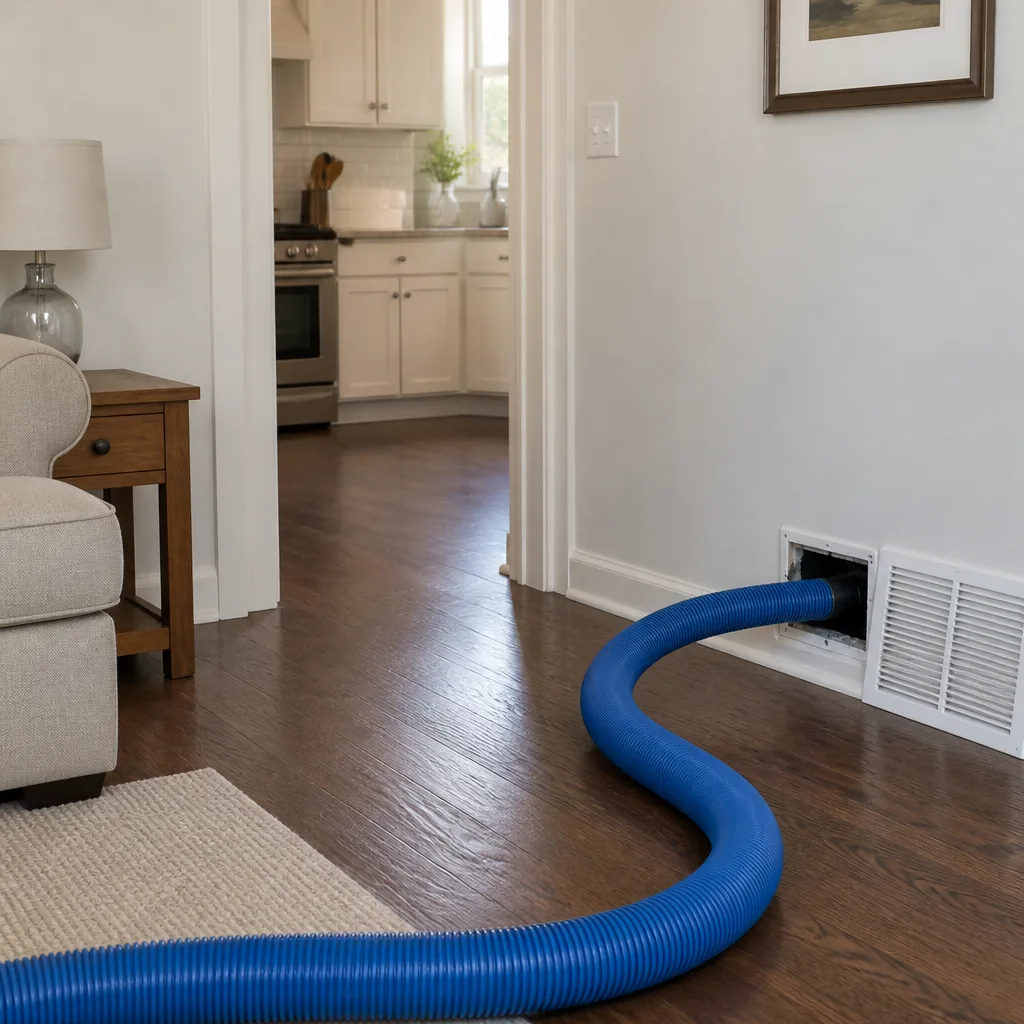 Whole-home duct cleaning
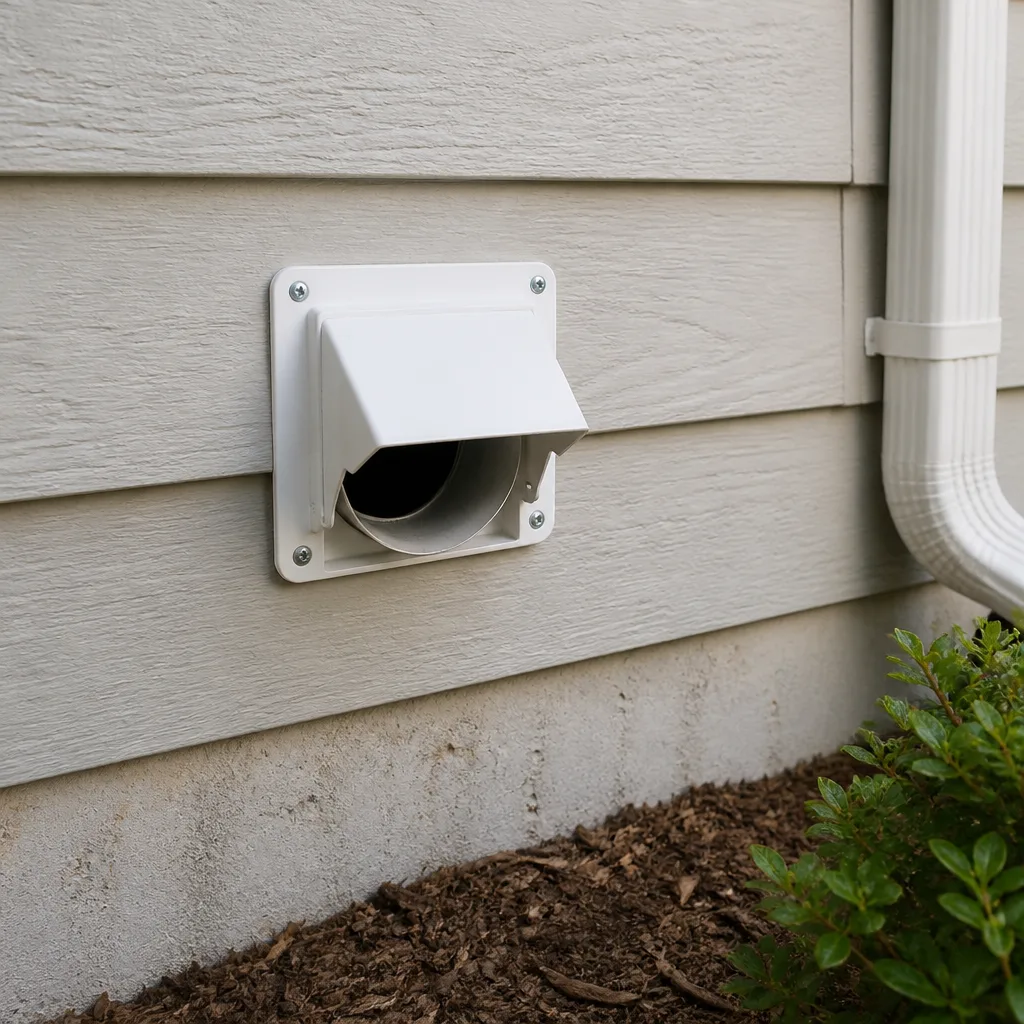 Dryer vent cleaning
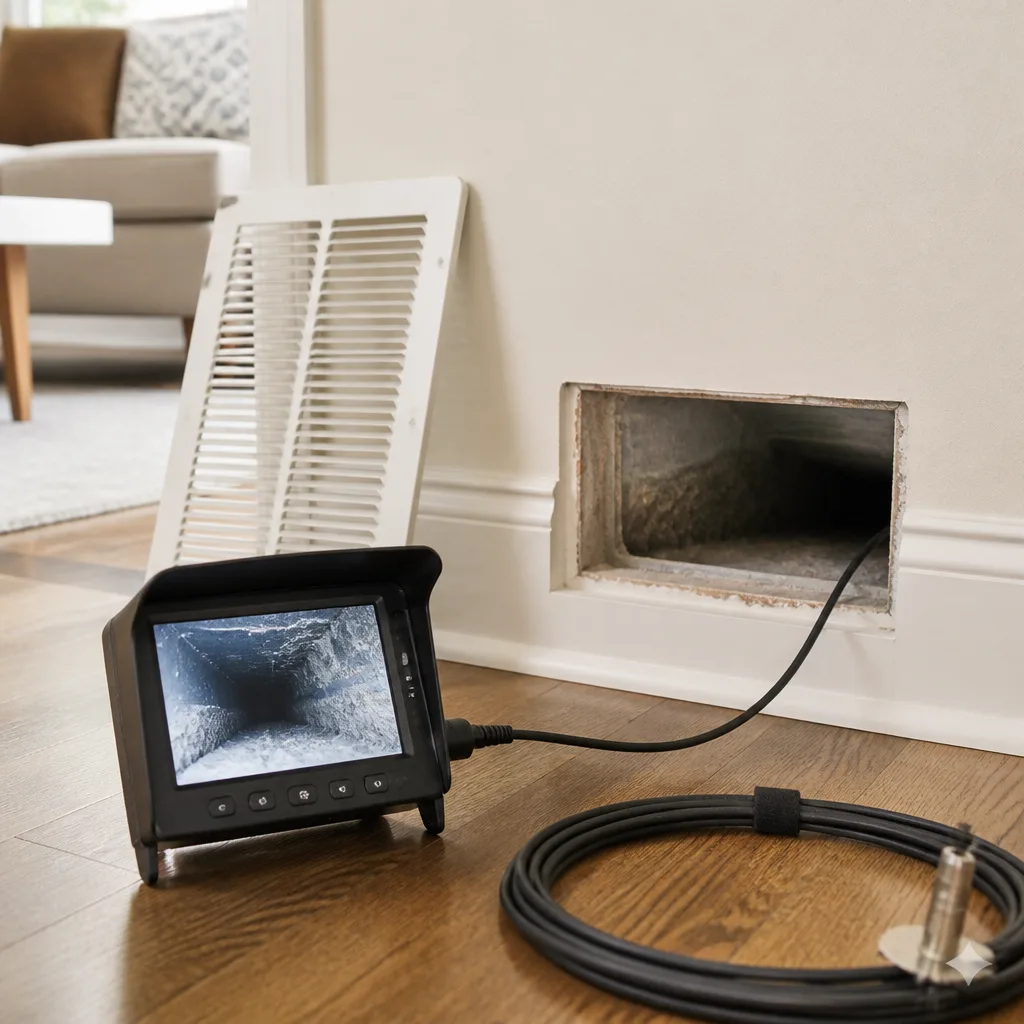 Camera inspection
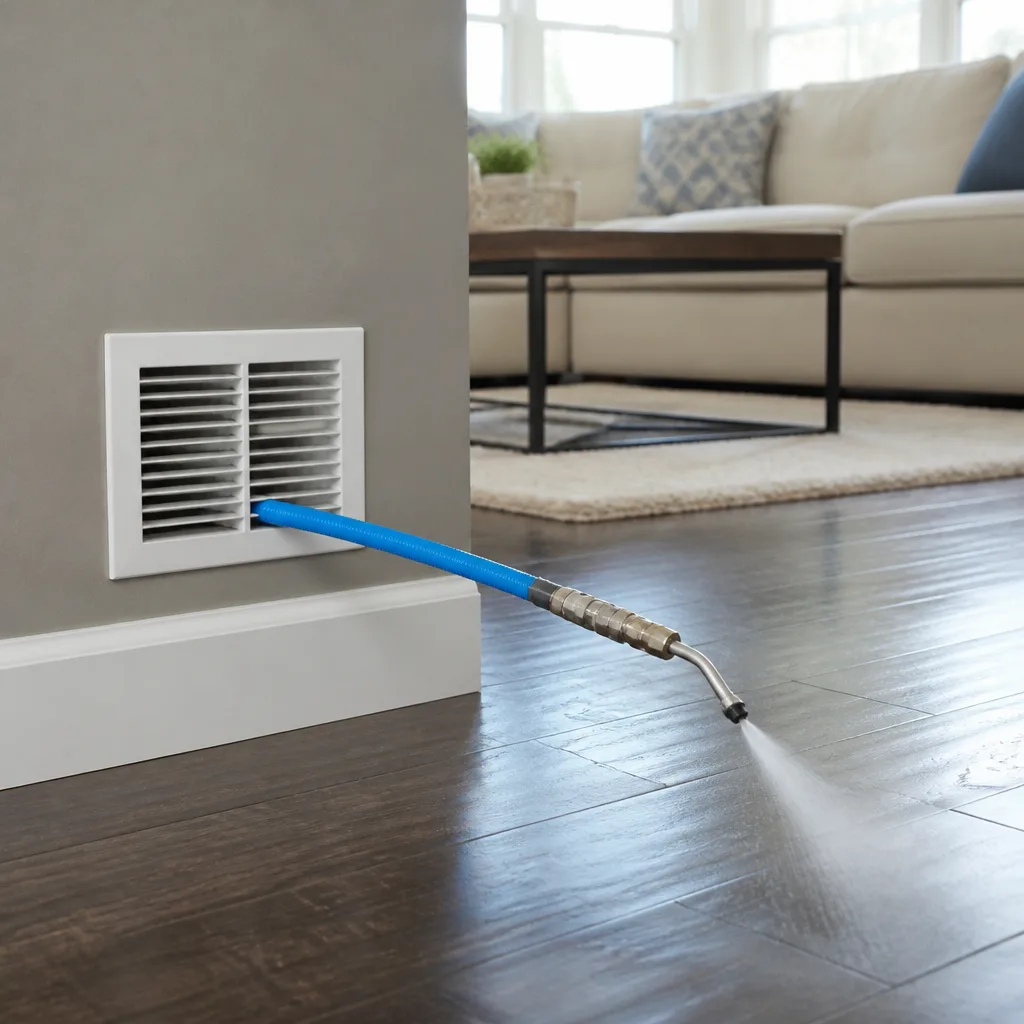 Sanitizing & deodorizing
Whole-system duct and dryer vent check with before-and-after photos - you see exactly what came out of your vents
That "$99 whole-house special" is a bait ad - the real number appears once they are in your hallway, or the "clean" is a shop-vac at the register. We photograph the inside of your ducts before and after instead.
Air Duct Cleaning Permits, Codes & Inspections in Highland Park, CA: What You Need to Know
Here’s the part most homeowners miss. Hiring someone to clean your ducts usually needs no permit at all. Hiring that same company to seal, cut into, or replace sections of ductwork on the same visit can cross a line under Los Angeles County and California rules, and the paperwork changes. That distinction matters more than people expect, especially if you plan to sell your Highland Park home or ever need to file an insurance claim. In this guide we’ll walk through where cleaning ends and mechanical modification begins, how Title 24 touches duct sealing, what a certificate of compliance is, and the exact questions to ask any contractor before they start cutting.
Quick Answer
Cleaning the inside of your air ducts in Highland Park generally does not require a building permit. Physically altering the duct system, such as sealing joints, replacing duct sections, rerouting a dryer vent, or changing how the system connects to your HVAC equipment, can trigger permit requirements and Title 24 energy code documentation. The line between the two depends on scope, so the right move is to ask your contractor which parts of the job are cleaning and which are modification, then confirm with the City of Los Angeles Department of Building and Safety before work begins.
Styles & brands we work with
- Whole-home duct cleaning
- Dryer vent cleaning
- Camera inspection
- Sanitizing & deodorizing
Table of Contents
- Does air duct cleaning require a permit in Highland Park?
- Where cleaning ends and mechanical modification begins
- How California Title 24 intersects with duct sealing
- What a certificate of compliance looks like for duct work
- How unpermitted duct modifications surface during home sales and insurance claims
- What gets inspected and how to prepare for it
- What to ask your contractor about permit territory
- Highland Park housing stock and the duct problems we actually see
Does air duct cleaning require a permit in Highland Park?
No. Routine air duct cleaning in Highland Park is treated as maintenance, not construction, and maintenance does not require a building permit. A technician who opens vents, runs a rotary brush and HEPA vacuum through the system, cleans the plenum and returns the system to service is doing the same category of work as changing a filter, just at a much deeper level. There’s no permit pulled, no inspection scheduled, and nothing recorded with the city.
That answer holds as long as the ducts come out the way they went in. What shifts the picture is when the work changes the physical system. Cutting a new opening, adding a run to a room that didn’t have one, replacing damaged flex duct, or sealing every joint as part of an energy upgrade moves the job into construction territory. At that point, Los Angeles County and the City of Los Angeles can require a permit, and depending on the scope, an inspection once the work is done.
Practical rule for Highland Park homeowners: separate the two services on paper. Ask your contractor to quote cleaning and any repair or sealing as distinct line items, so you can see exactly which part of the job, if any, needs a permit. If a contractor can’t split it out, that’s information worth having before you book.
- Cleaning only: no permit, no inspection, treated as maintenance.
- Cleaning plus minor sealing of accessible joints: often no permit, but confirm scope with the contractor.
- Replacing duct sections or rerouting runs: typically requires a permit and may require inspection.
- Dryer vent rerouting through a wall or roof: likely requires a permit because it’s a structural penetration and a fire-safety system.
- Duct changes tied to an HVAC replacement: falls under the HVAC permit, so the two get reviewed together.
Where cleaning ends and mechanical modification begins
The cleanest way to think about the boundary is this: cleaning removes material from the duct, while modification changes the duct itself. Removing dust, debris, pet hair, construction dust from a recent remodel, or buildup around return grilles is cleaning. Cutting, joining, sealing with mastic, replacing a crushed flex run under a Highland Park house, or adding length to a run is modification. The moment the duct’s physical shape or connections change, you’re outside pure cleaning.
Two specific categories trip people up in Highland Park more than any others.
Duct repair and sealing. When a technician finds disconnected joints in a crawl space or attic, or a run crushed under a floor joist, sealing those joints and reconnecting the run is repair work. Small repairs with accessible joints often don’t require a permit. Larger replacement work, especially anything that changes how the system moves air, can. A company that offers duct repair and sealing as a real service, not just cleaning, should be able to tell you which category your job falls into before the first tool comes out.
Dryer vent modifications. Cleaning a dryer vent is maintenance. Moving the vent termination to a different wall, changing the run length, or adding a new roof penetration is construction. Dryer vents are a fire-life-safety system, so cities take changes to them more seriously than people assume. If your dryer vent is crushed behind the unit or terminates in a spot that no longer works, that repair and reroute conversation needs to happen before anyone starts cutting.
If you’re unsure where your job lands, ask the question directly: “Which parts of this work are cleaning, and which parts are modification?” A contractor who handles the full air system regularly will answer without hesitation. If you’re already thinking about air duct cleaning and want to know what a proper full-system evaluation looks like, that page walks through the process step by step.
How California Title 24 intersects with duct sealing
California’s Title 24 energy code is the reason duct sealing is treated as more than a quick fix. Title 24 sets performance expectations for building energy use, and ductwork sits squarely in that picture because leaky ducts waste a large amount of air before it ever reaches a room. When duct sealing is done as an energy upgrade or as part of a larger HVAC project, the work can fall under Title 24 compliance requirements, which means more than just doing the work, it means documenting it.
In practice, duct sealing work done under Title 24 typically involves three things:
- A scope documented before work starts. Which ducts, which joints, what method of sealing, what the expected outcome is.
- Verification after the work. Some scopes require the sealed system to be tested, typically by a third party, to confirm leakage is below a threshold. The threshold and test method come from the code, not the contractor.
- A certificate of compliance on file. A signed document that records the work, the materials, and the verification result. That’s what a future buyer, a home inspector, or an insurer will ask for.
This is the piece Highland Park homeowners tend to skip, and it’s the piece that comes back to bite. A duct-sealing job with no paperwork behind it looks, from the outside, exactly like no work was done at all. When you go to sell, an inspector sees sealed joints and asks for the certificate. When you have no certificate, the assumption shifts in an unhelpful direction.
The other thing to know is that Title 24 compliance is separate from permitting. A job can require a permit and not trigger Title 24 documentation, or the reverse. Ask both questions separately: does this need a permit, and does this need a Title 24 compliance certificate? They’re different answers for different scopes.
What a certificate of compliance looks like for duct work
A certificate of compliance for duct work is a signed document that ties a specific scope of work to the code requirements it satisfies. It typically includes the property address, a description of the work performed, the materials used, who did the work, and any required verification or testing results. On Title 24 related jobs, the certificate is what separates a documented energy upgrade from an undocumented repair.
What to check on your own certificate when the job is done:
- Property address matches exactly. Not the mailing address, not the contractor’s address. The address on the permit and the certificate should match.
- Scope matches what was actually done. If the certificate says “sealed all accessible joints in attic and crawl space,” those joints should be sealed when you look.
- Signature and date present. An unsigned or undated certificate is worthless for a future sale.
- Test results attached if the scope required testing. If the code required verification, the result should be there.
Keep a physical copy and a digital copy. Home sales are the obvious place this surfaces, but so is insurance. If you ever file a claim related to your HVAC system or ducting, an insurer can ask for documentation of recent work. A missing certificate doesn’t automatically void a claim, but it does make the conversation longer and less friendly.
One nuance worth naming: certificates are issued for permitted or code-covered work, not for cleaning. Don’t expect one for a routine cleaning, and be skeptical if someone offers you one.
How unpermitted duct modifications surface during home sales and insurance claims
Unpermitted duct modifications are quiet. They don’t show up as an obvious red flag the way an unpermitted addition does. But they surface during a home sale in two ways. First, a home inspector looking at the HVAC system will note ducts that appear to have been modified, and the buyer’s agent will ask for documentation. Second, if the seller’s disclosure mentions recent duct or HVAC work, the buyer’s inspection will look for the paper trail. Missing paperwork gets resolved one of two ways: the seller provides it later, or the price adjusts.
Insurance claims are the second place. If a fire or water loss involves your HVAC system or ductwork, the insurer is going to ask how the system was last serviced and whether recent work was done to code. Unpermitted, undocumented modifications complicate that conversation. They don’t automatically deny a claim, but they can slow it down and shift the burden of proof.
Three practical habits head this off:
- Ask before work starts whether the scope includes any modification that requires a permit.
- Keep every document related to any duct or HVAC work, including the estimate, the certificate of compliance if one applies, and photos of the finished work.
- When you buy a Highland Park home with recent duct or HVAC work in the disclosure, ask the seller for the permit and compliance paperwork before you close.
This is one of those places where the paperwork is worth more than the work itself. A documented duct sealing job is an asset. An undocumented one is a question mark.
What gets inspected and how to prepare for it
Not every duct job gets inspected. Cleaning never does. A repair or modification that required a permit may get inspected, and the inspection is usually a visual review plus a check against the scope on the permit. On Title 24 jobs, there’s often a separate verification step, which is a testing procedure rather than an inspection, and it’s typically done by a third party rather than the city.
How to prepare if your job includes an inspection:
- Make sure access is clear. The inspector needs to see the joints, the connections, and the equipment. If the attic hatch is painted shut or the crawl space is blocked, that’s a scheduling problem.
- Confirm what’s being inspected. Ask your contractor whether the inspection covers just the new work or the whole system. The answer affects how much needs to be exposed.
- Have your documents together. Permit, certificate of compliance if applicable, and the contractor’s estimate and invoice.
- Do not close up walls or ceilings before the inspection. This is the single most common way a permitted duct job turns into a rework job. Any ductwork inside a wall cavity or soffit needs to stay accessible until sign-off.
- Ask the contractor to be present. On a licensed inspection, the contractor who pulled the permit should walk the inspector through the work. If they can’t be there, ask why.
Inspections are not the obstacle. They’re the record. The one thing that turns a minor inconvenience into an expensive week is closing up the access point before the inspector’s seen it.
What to ask your contractor about permit territory
You don’t need to learn the building code to protect yourself. You need to ask good questions and read the answers carefully. Here are the ones that matter most when a Highland Park contractor is quoting duct work:
- “Which parts of this estimate are cleaning, and which are modification?” If they can’t split it, that’s a red flag.
- “Does any part of this scope require a permit?” A clean “no, because it’s cleaning only” is reassuring. A clean “yes, on the section replacement” is also reassuring, because it means they know the rules. A shrug is not.
- “Who pulls the permit if one is required?” The contractor who performs the work should pull it. If they ask you to pull homeowner permits, that’s a sign they’re not set up for the work.
- “Will I get a certificate of compliance when it’s done?” The right answer depends on scope, but they should be able to tell you the answer in advance.
- “What does the inspection require me to leave open?” Ask this before work starts so you can plan around it.
- “Can I see before-and-after photos of the work?” Any contractor worth hiring photographs their finished work, and you should see yours.
Our technicians have up to 8 years of experience, and the question that comes up most is exactly this one: how much of the job crosses into permit territory. A straight answer in the estimate is what you’re looking for, not in a follow-up call after the work has started.
Highland Park housing stock and the duct problems we actually see
Highland Park is a neighborhood of older homes, and older homes have particular duct profiles. The housing stock here runs from early twentieth century bungalows to mid-century ranch homes to newer infill, and the ducts were installed to whatever standard was current when each home was built. A 1920s Highland Park bungalow typically has original ducting that’s been modified over decades as rooms were added, walls moved, and HVAC systems replaced. Those modifications are often undocumented, and the result is a system that looks fine from the register grille and leaks heavily at the joints in the attic or crawl space.
That’s where the permit question becomes concrete. A cleaning on a Highland Park bungalow with original ducting is genuinely maintenance, and it’s often the right first step. A cleaning on that same system where the technician also finds and fixes disconnected runs, crushed flex, or crushed joints under a floor joist is cleaning plus repair, and the repair part needs to be identified before work starts.
Los Angeles’ mild, dry climate matters here too. The temperature swings are gentler than in colder parts of the country, so ducts take less thermal load, but the attic heat in summer is real, and older duct tape used on Highland Park homes often loses adhesion over years of that cycling. What looks like sealed joints in a photograph may be tape that’s failed and separated by several millimeters. That’s the kind of thing that shows up during a proper evaluation, not during a surface vacuum.
That’s also why the equipment matters. We use Rotobrush rotary brush and HEPA vacuum systems for mechanical agitation and capture, Nikro HEPA-rated equipment for fine-particle filtration, and Abatement Technologies negative-air machines for remediation-grade containment when the conditions call for it. Guardsman and Aprilaire products come in on the air quality side when microbial growth needs treatment beyond mechanical cleaning. You can see the HVAC cleaning process we run on the whole system, not just the visible ducts, if you want to understand what full-scope means in practice.
Common Mistakes to Avoid
- Assuming all duct work is permit-free because “it’s just cleaning.” Cleaning is. Sealing, replacing, or rerouting may not be. Ask the contractor to split the scope on paper before you book.
- Not asking about Title 24 on duct sealing. If your sealing job is treated as an energy upgrade, it may need compliance documentation. If nobody mentions it, ask.
- Closing up walls or ceilings before an inspection. In a Highland Park home with ducts in a wall cavity or soffit, closing the access point before sign-off turns a routine inspection into a rework job.
- Letting a contractor talk you out of a certificate when one applies. If the scope requires it, get it. Without it, the work is unverifiable to a future buyer or insurer.
- Hiring on price alone when the scope is unclear. A quote that’s dramatically lower than the others on a Highland Park job is often lower because it’s cleaning-only without saying so, or because the repairs get identified after the truck’s arrived.
- Pulling the permit yourself as a homeowner when a contractor should. Homeowner permits are legal in some cases, but they put the documentation burden on you and the liability stays with you if something goes wrong.
- Skipping the before-and-after photos. If a contractor doesn’t photograph the finished work, you have no record of what was actually done. That record is the point.
See the difference
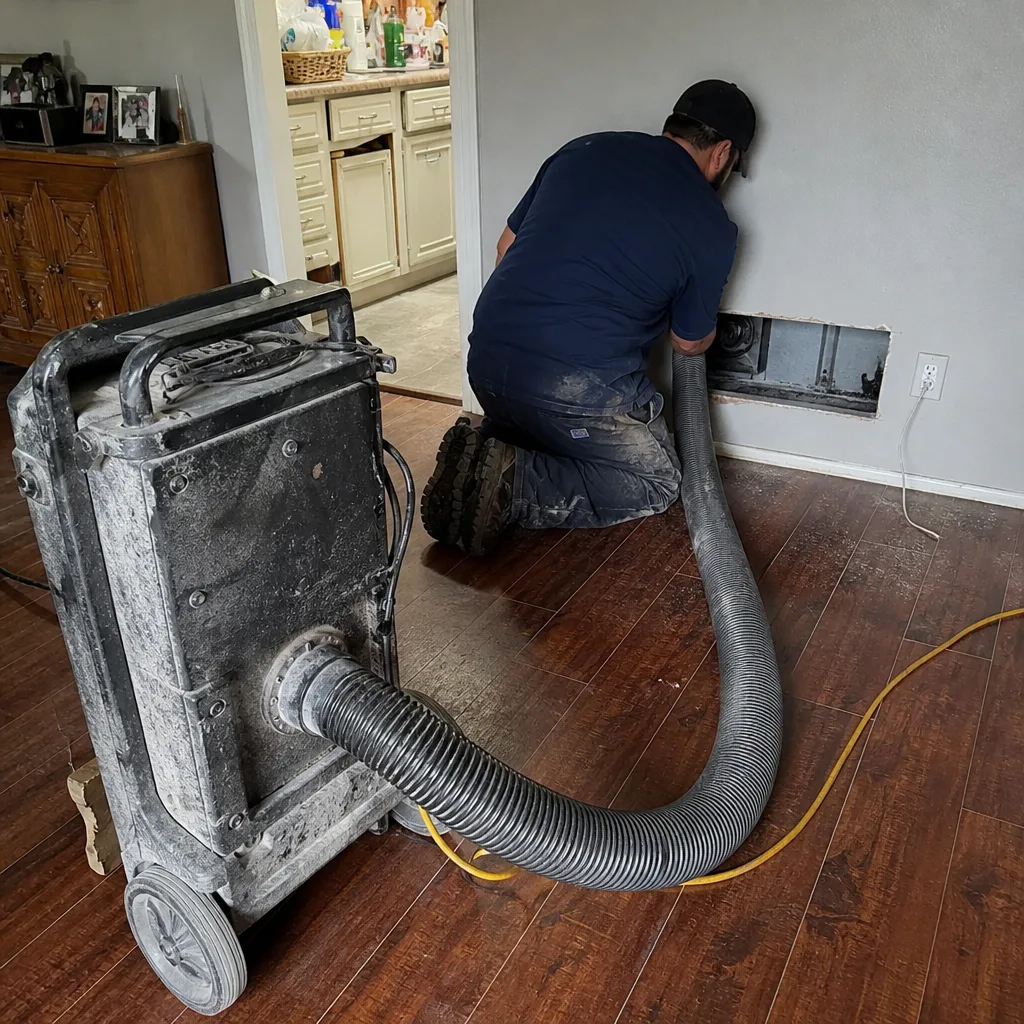 Before
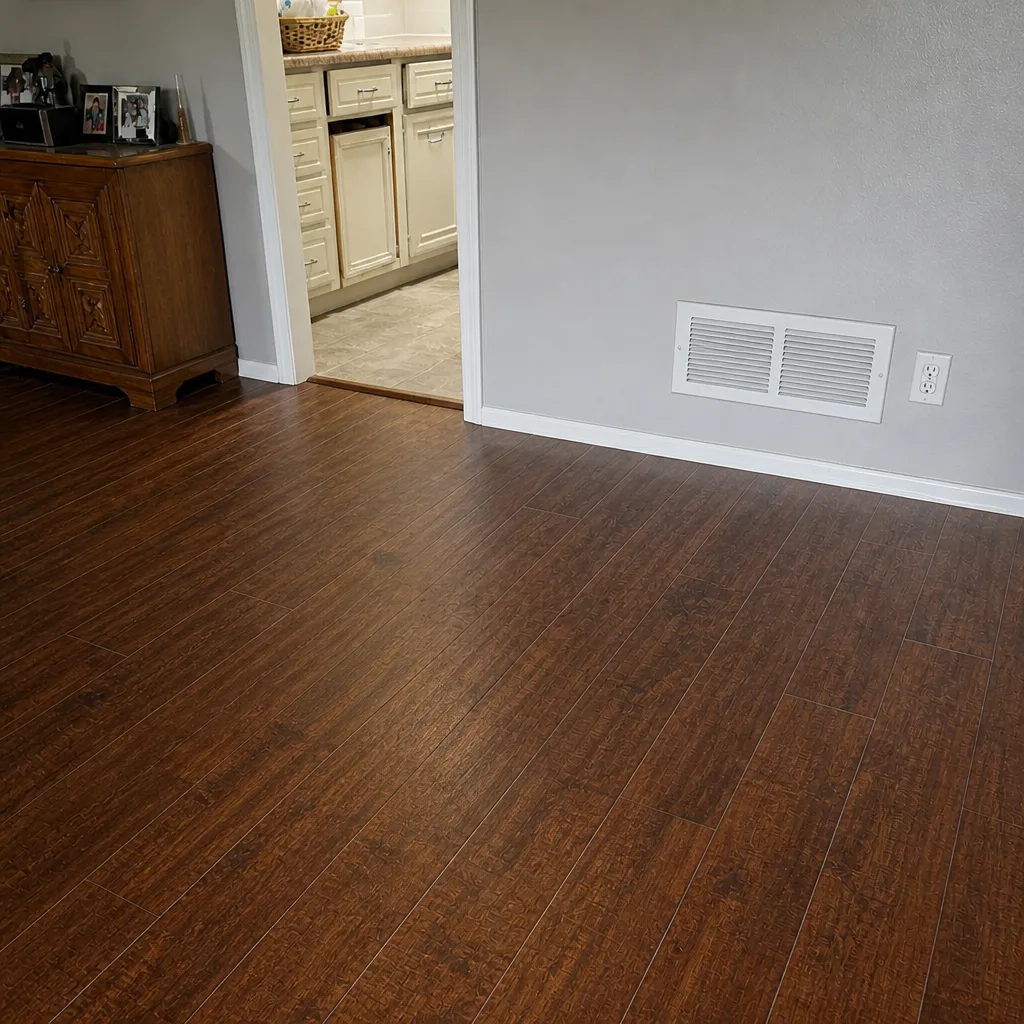 After
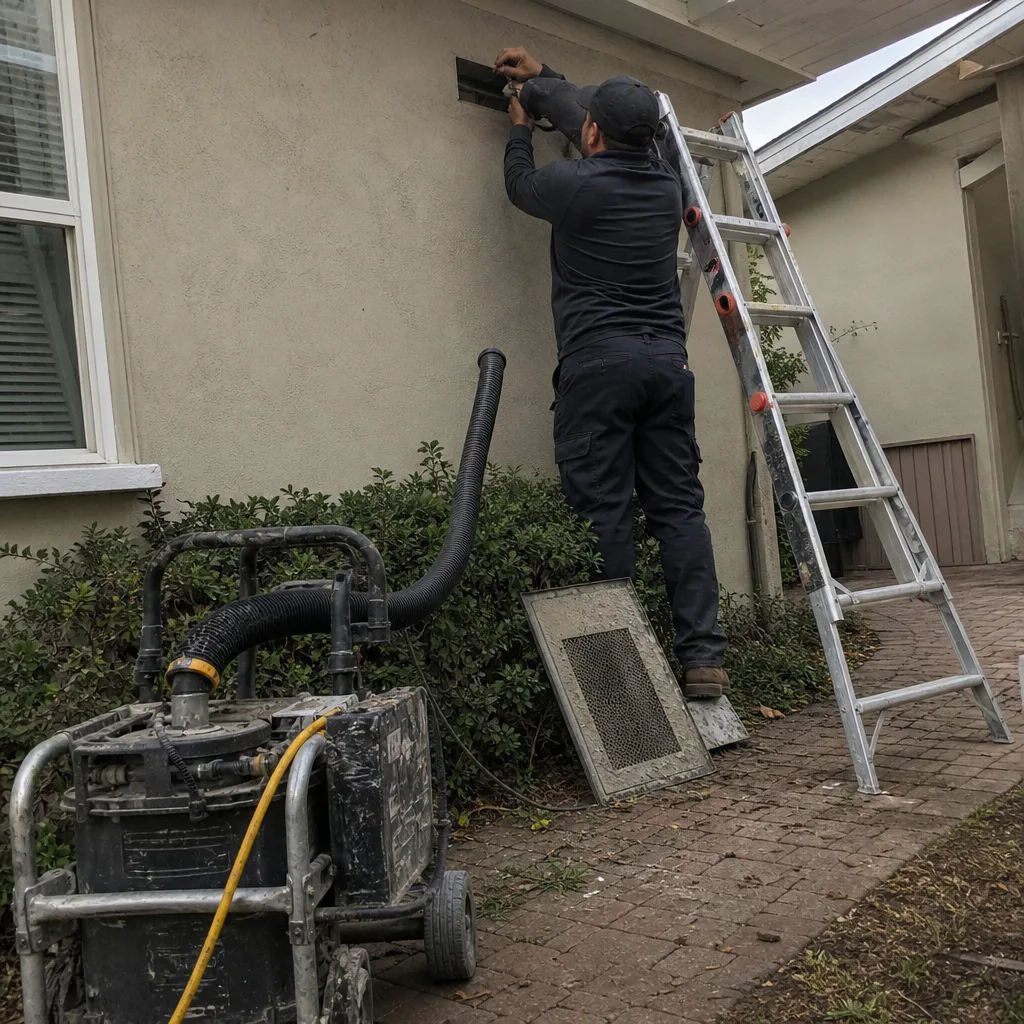 Before
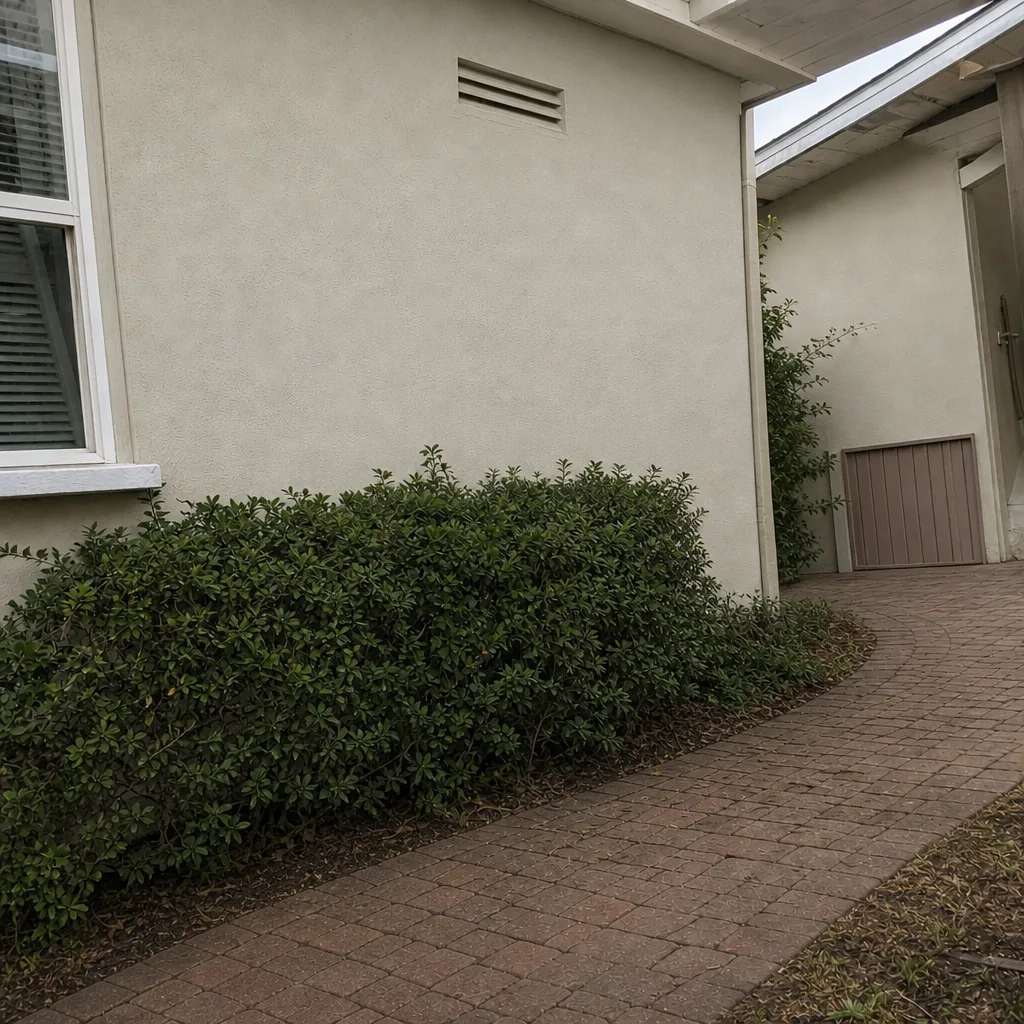 After
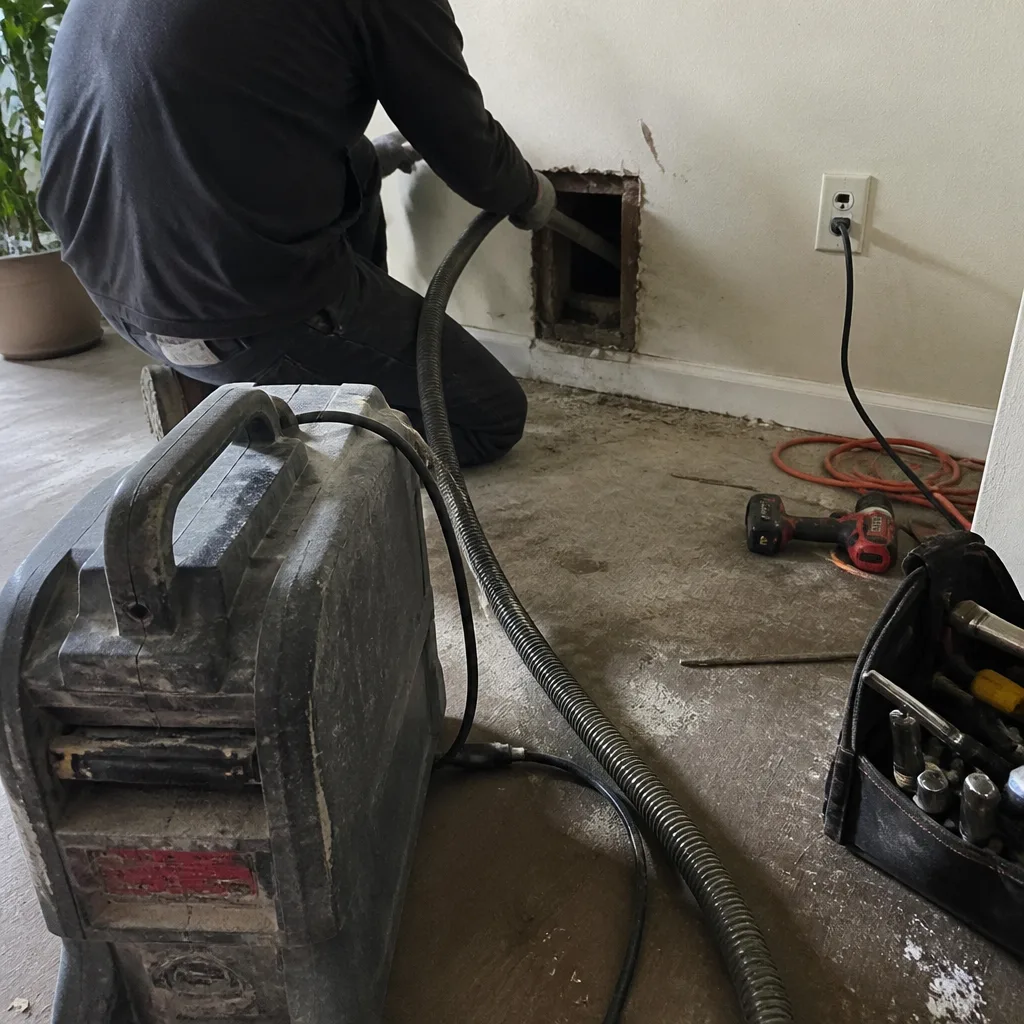 Before
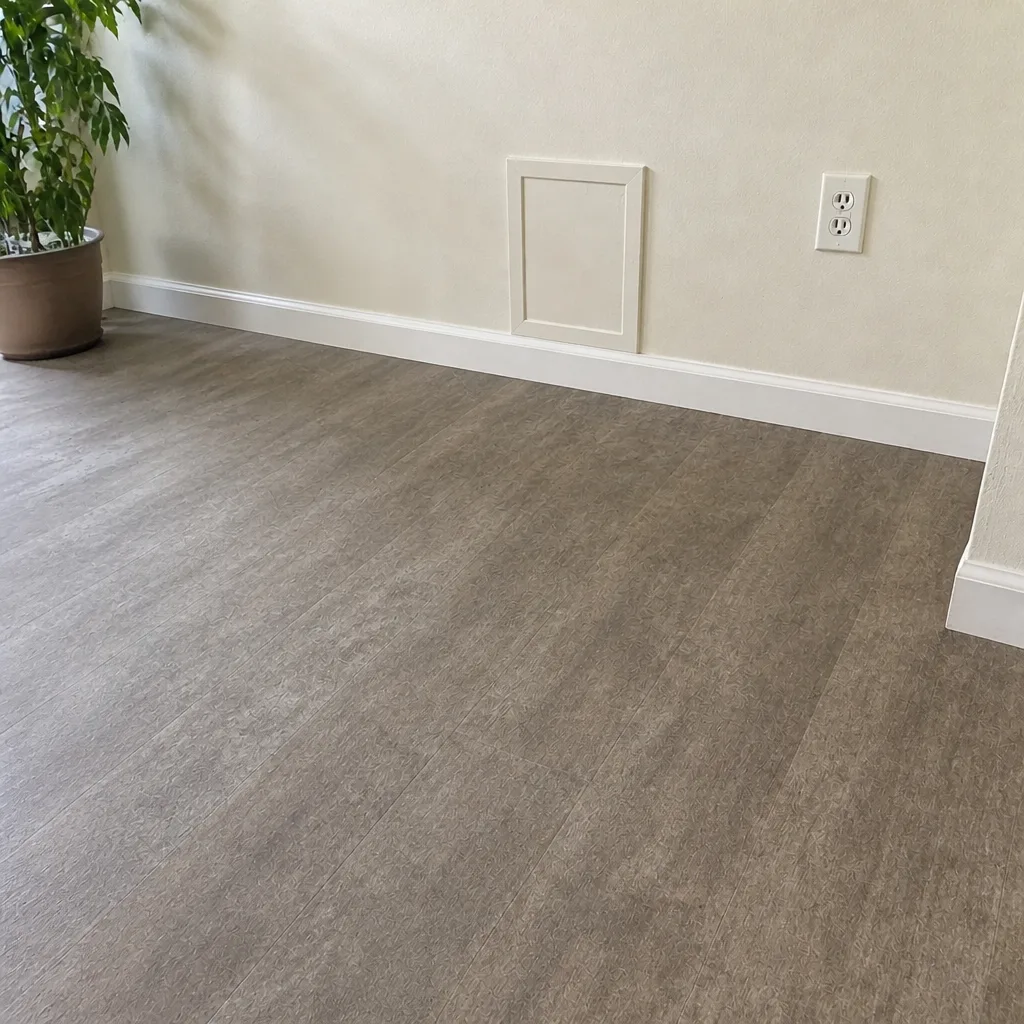 After
When to Call a Professional
Call for an evaluation when you’re about to sell a Highland Park home and you’re not sure what recent duct work was permitted, when a home inspection flagged duct modifications with no documentation on file, or when your insurance company has asked for records of prior work before moving a claim forward. Call if you’ve had a cleaning that didn’t look or feel complete and you want a second opinion on what the first company actually did. Call before you have anyone cut into ductwork or reroute a dryer vent, so the scope and permit question get answered before the first tool comes out. And call if you’re simply not sure where your job lands on the cleaning-versus-modification line, because that’s the moment the question is cheapest to answer.
Highland Park Air Duct Cleaning Pros offers free estimates in Highland Park. Call (844) 702-0753. We answer 24/7. Fast dispatch from 7am to 7pm, Sunday through Friday, closed Saturday. We’ll split the scope, tell you what a permit might apply to, and be straight about what actually needs doing versus what doesn’t.
Frequently Asked Questions
No. Routine air duct cleaning in Highland Park is maintenance and does not require a building permit. The cleaning itself, including the equipment used and the debris it removes, falls outside the permit process. If the same visit includes duct sealing, section replacement, or rerouting a dryer vent, ask your contractor to identify which part of the scope is modification, because that’s where permit requirements can enter the picture. Call (844) 702-0753 for an exact quote on the scope you have in mind, estimates are free.
Sometimes. Duct sealing done as a stand-alone maintenance repair often doesn’t trigger Title 24, but sealing done as an energy upgrade or as part of a larger HVAC project can. In those cases you may need documentation, and you may need third-party verification of the results. Ask the contractor two separate questions: does this need a permit, and does this need a Title 24 certificate of compliance. Call (844) 702-0753 to talk through your specific scope, we’ll tell you what we see and what to ask the city.
It’s a signed document that records the property address, the scope of work, the materials used, who performed the work, and any required test results. The property address and scope should match what was actually done, and the document should carry a signature and date. A certificate with a mismatched address or missing test results isn’t useful for a sale or a claim. If your job requires one, make sure it’s in hand before the contractor leaves. Call (844) 702-0753 for a free estimate on documented duct sealing.
Yes. Unpermitted modifications are typically discovered during a buyer’s home inspection, and if there’s no paper trail, the buyer’s agent will ask for it. Missing documentation often gets resolved by the seller producing it later or by a price adjustment. The best protection is having any duct or HVAC work permitted and documented up front. If you’re buying a Highland Park home with recent duct work in the disclosure, ask for the permit and certificate before closing. Call (844) 702-0753 with questions about documenting work you’re planning.
Often because the “cheaper” quote is cleaning-only while the more expensive one includes repair or sealing that some competitors quietly bundle in, or because a low quote is designed to be re-priced once the technician is on site. Our pricing is one flat price per system, agreed before work starts, with before-and-after photos of your own ducts delivered when the job is done. No per-vent pricing, no teaser rates. Call (844) 702-0753 for a real estimate that reflects the whole system, estimates are free.
There’s no fixed schedule that applies to every home. Highland Park homes with original ducting, pets, recent remodels, or occupants with respiratory sensitivities tend to benefit from more frequent evaluation. Homes with a newer, well-sealed system can go much longer. The right answer comes from an inspection, not a rule of thumb. Call (844) 702-0753 to schedule a free estimate and get an honest read on your system. We answer 24/7. Fast dispatch from 7am to 7pm, Sunday through Friday, closed Saturday.
The Bottom Line
Cleaning your ducts in Highland Park doesn’t need a permit, but the repairs and modifications that sometimes come with it can. Duct sealing, section replacement, and dryer vent rerouting live on the other side of that line, and they can trigger both permit requirements and Title 24 compliance documentation. The paperwork matters as much as the work, especially for a future home sale or insurance claim. Ask any contractor to split their scope into cleaning versus modification, ask which parts may need permits, and ask for a certificate of compliance when it applies. If you’re not sure where your job lands, that’s the right time to call. Highland Park Air Duct Cleaning Pros (844) 702-0753 offers free estimates. We answer 24/7. Fast dispatch from 7am to 7pm, Sunday through Friday, closed Saturday. We’ll give you a straight answer and one flat price per system, agreed before work starts.
Related reading: what a proper dryer vent cleaning covers, and how duct repair and sealing fits with the rest of your air system through Highland Park Air Duct Cleaning Pros. If you’re evaluating contractors generally, our guide on air duct cleaning walks through the questions to ask at each stage.
Written by the team at Highland Park Air Duct Cleaning Pros.