
Last updated November 22, 2026
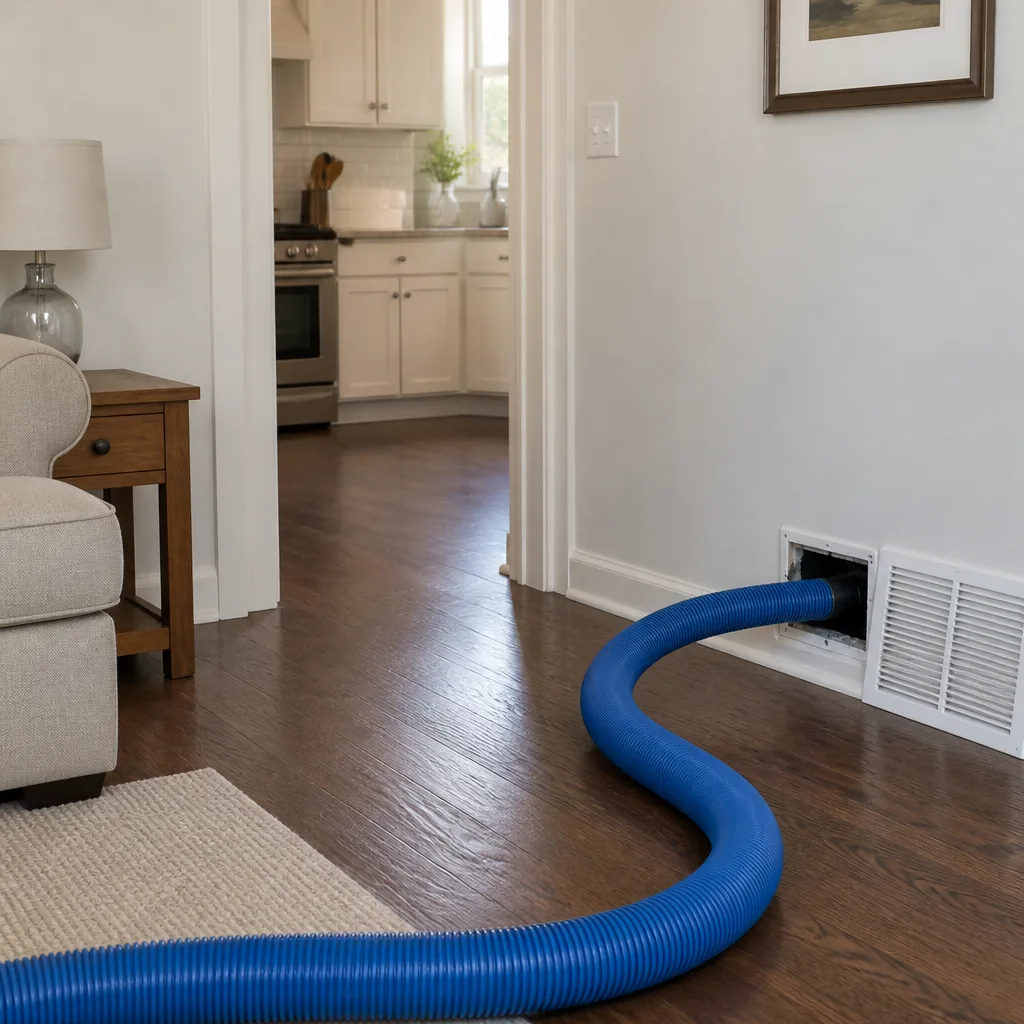 Whole-home duct cleaning
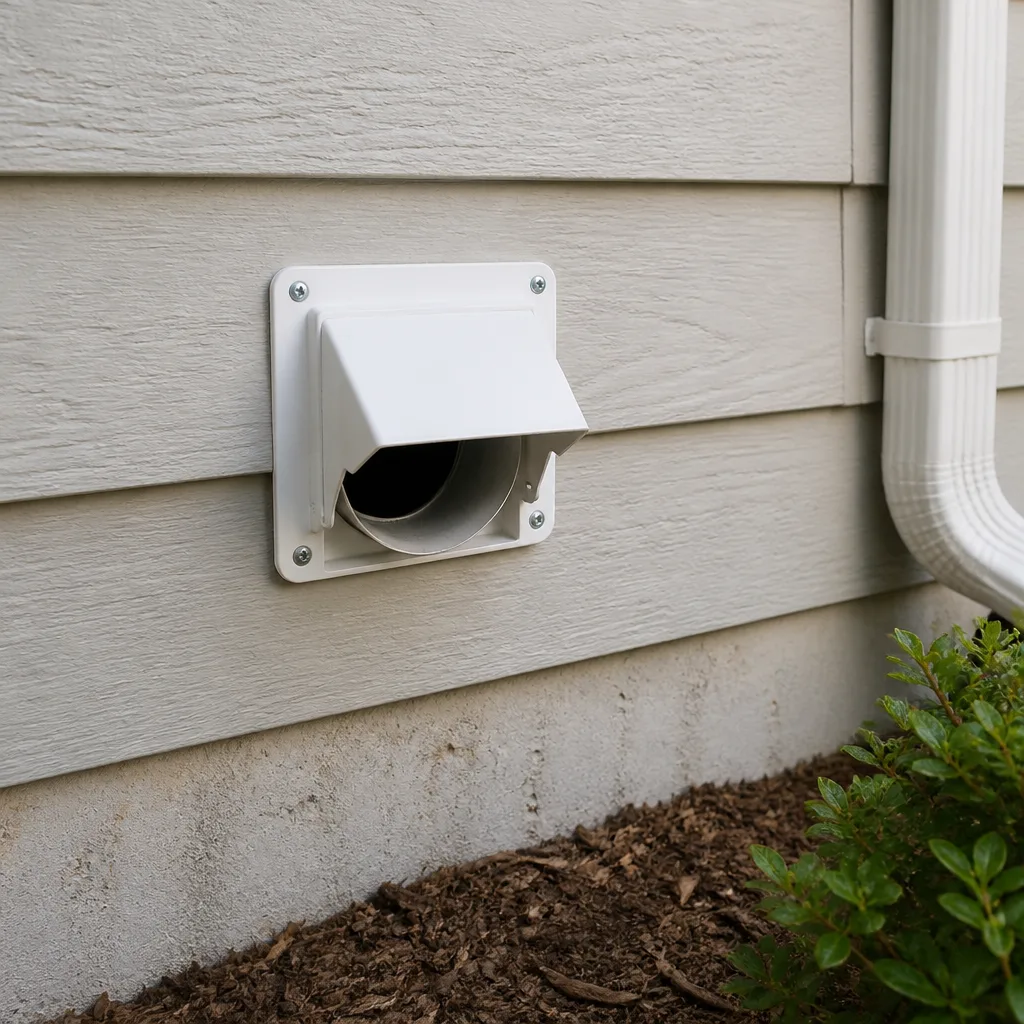 Dryer vent cleaning
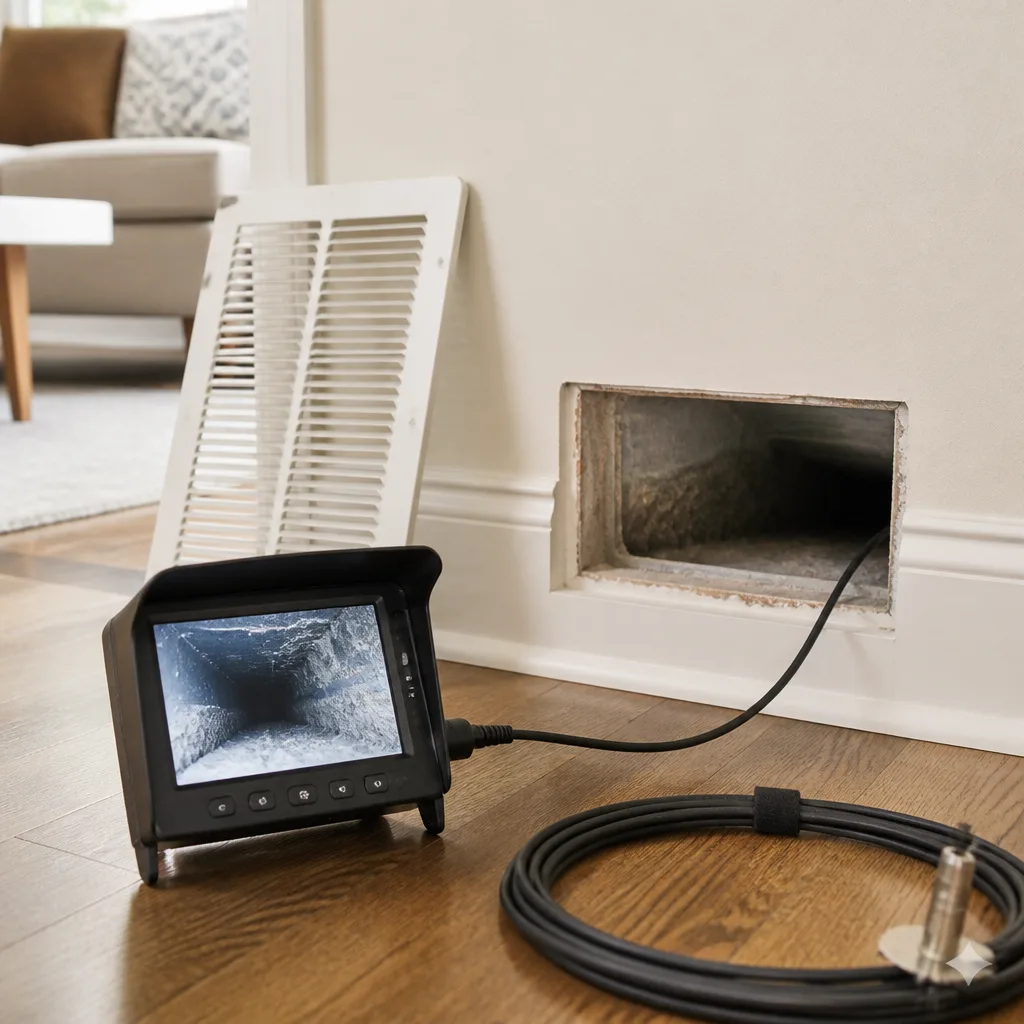 Camera inspection
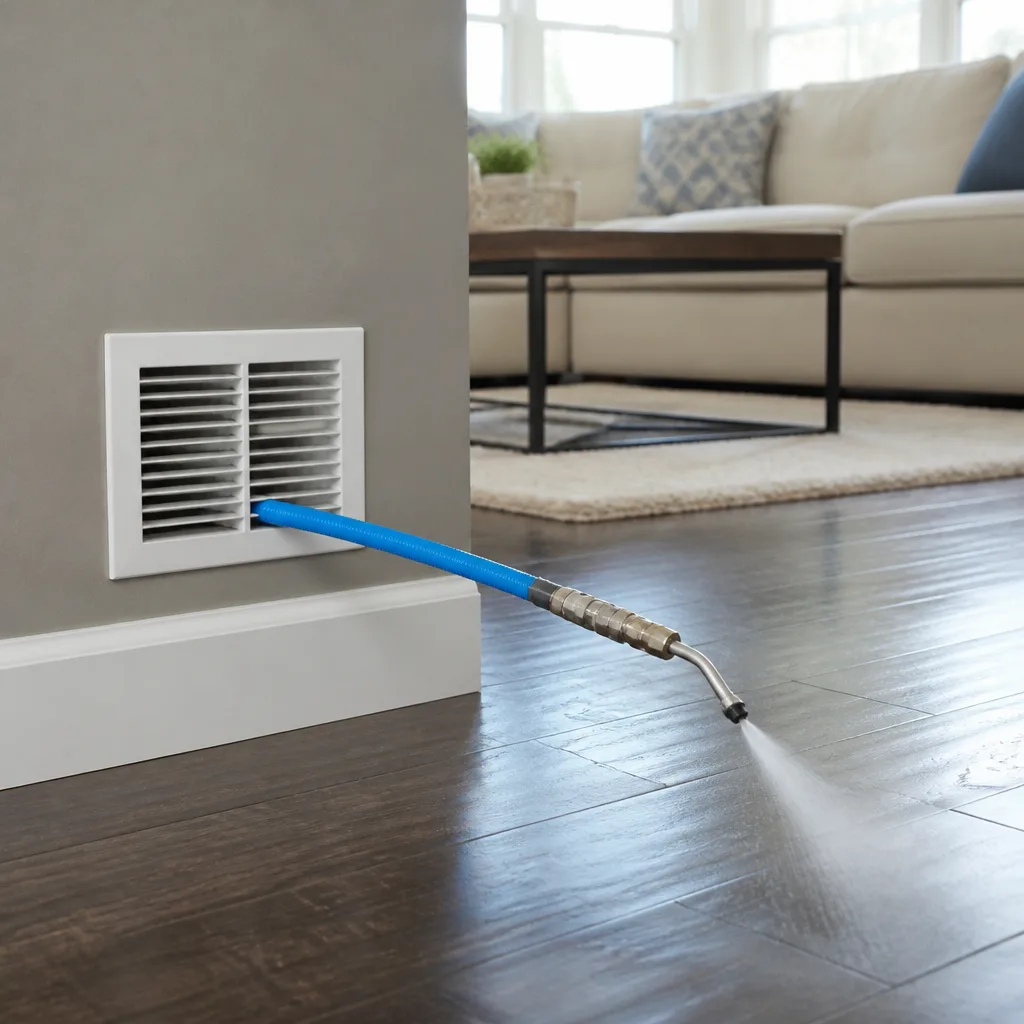 Sanitizing & deodorizing
Whole-system duct and dryer vent check with before-and-after photos - you see exactly what came out of your vents
That "$99 whole-house special" is a bait ad - the real number appears once they are in your hallway, or the "clean" is a shop-vac at the register. We photograph the inside of your ducts before and after instead.
Air Duct Cleaning Cost Breakdown: The Highland Park Homeowner’s Reference for 2026
Two duct cleaning quotes for the same Highland Park house can land $700 apart and both be honest numbers. That sounds like a contradiction until you look at what each bid actually covers: one price includes registers and returns, the other doesn’t; one accounts for a 1940s bungalow with a converted attic, the other was written from a phone description. The gap isn’t a scam or a bargain, it’s a scope difference nobody bothered to explain. This guide won’t hand you a price list, because a price list without scope is useless. Instead, we’ll show you the five things that drive cost on every job, how a Highland Park home’s layout and age change those drivers, and how to read a quote and know within a few minutes whether it’s complete, thin, or padded.
Quick Answer
Air duct cleaning in Highland Park typically runs somewhere between a few hundred and roughly a thousand dollars per home, and the variance comes down to five factors: total linear footage of ductwork, how many supply and return vents are in the system, how accessible the runs are, the age and design of the system, and how contaminated it is. A legitimate quote itemizes those factors. A quote that doesn’t is a red flag, whatever the number at the bottom. Highland Park homes on the older, hillier side of town tend toward the higher end because the duct systems were often added to homes that weren’t designed around them – but not always, and a good technician will tell you when a lower price is the honest one.
Styles & brands we work with
- Whole-home duct cleaning
- Dryer vent cleaning
- Camera inspection
- Sanitizing & deodorizing
Table of Contents
- What Actually Drives the Cost of Duct Cleaning
- Why Highland Park Homes Cost What They Do
- What Should Be on a Legitimate Invoice
- Add-Ons: When They’re Worth It and When They Aren’t
- Red Flags in a Low-Bid Quote
- When a High Bid Is Actually Justified
- How to Reverse-Engineer Any Quote You Receive
- Frequently Asked Questions
What Actually Drives the Cost of Duct Cleaning
Duct cleaning isn’t priced by the hour, and it isn’t priced by the vent, no matter how often a company markets it that way. A per-vent price is a number a company can quote over the phone without visiting, and that’s exactly its weakness – it says nothing about length of run, ceiling height, or whether the supply trunk is boxed in behind drywall. Here are the five real cost drivers, in the order they affect the final number.
1. Linear footage of ductwork
This is the single biggest factor. A 1,200-square-foot home with a simple trunk-and-branch layout might have 40 linear feet of duct. A 2,400-square-foot Highland Park home with a converted attic, a rear addition, and a split system can run well over 120 feet, and every foot takes time for a rotary brush and HEPA vacuum to clean properly. Duct length isn’t a number a customer can eyeball, which is why a technician should measure it, or at least count runs, before quoting.
2. Number of supply and return vents
Each supply register and each return grille requires removal, cleaning, and reinstallation, and the return side often produces the heaviest dust load. A home with eight supplies and two returns is a different job from one with sixteen supplies and four returns. Per-vent pricing exists because it’s easy to explain, but a fair quote lists the vent count as a component of the job instead of treating it as the whole job.
3. Accessibility of the duct system
Access is where quotes diverge most sharply. Ducts under a crawlspace, ducts buried in a soffit, ducts behind a finished basement ceiling, and registers mounted high in a vaulted ceiling all take longer. Some runs can only be reached through an access panel that needs to be cut and restored. Accessibility is also why a flat-lot suburban home and a hillside Highland Park home with a pier-and-beam foundation can carry very different prices for the same square footage.
4. Age and design of the system
Older flex-duct with sagging runs holds debris differently than rigid metal duct. Original ductwork from a mid-century remodel may have been sized for a system that’s since been replaced, leaving odd transitions and gaps. Systems that were retrofitted into a home with no original ductwork often have the most irregular – and most time-consuming – routing.
5. Contamination level
A system that’s been cleaned before will usually take less time than one that’s never been touched, especially if the home has had pets, remodeling dust, or a recent roof or drywall project. Heavy contamination can require additional passes, higher-HERO filtration, and, in some cases, negative-air containment setup like the Abatement Technologies equipment we use on jobs where cross-contamination is a concern.
Those five factors are how a technician builds a price. If a quote you’ve received doesn’t mention at least three of them, it isn’t really itemized – it’s a guess.
Why Highland Park Homes Cost What They Do
Highland Park is not a flat-lot subdivision. That single fact reshapes duct cleaning pricing here in ways that a generic cost calculator can’t account for. A few patterns come up over and over on Highland Park jobs.
Older homes with retrofitted ductwork
Many Highland Park houses were built before central air was standard, which means their ductwork was added later – often creatively. Runs cut through closets, through the attic, or along the rear of the house to reach an addition. Retrofit ductwork tends to have more turns, more junctions, and more sealed-with-tape-and-hope transitions than a planned system. Every one of those spots takes extra time to clean and to inspect for leaks.
Hillside lots and multi-level layouts
Highland Park’s hillside lots often mean split-level or stepped floor plans, with the mechanical equipment in a basement, a closet, or a crawlspace. That’s harder to service than a ranch home with a utility closet off the garage. Vertical runs from a basement unit to a second floor add linear footage and require equipment that reaches. Technicians who work in Highland Park regularly learn to ask about access before they quote, because it changes the number meaningfully.
Dense, mature neighborhood canopy
Older Highland Park neighborhoods have mature trees and older homes clustered closely, which tends to mean more pollen and debris entering homes – and more frequent cleaning intervals for families with allergies. That’s not a pricing factor in the quote itself, but it’s a reason to stay on a cleaning schedule rather than treating it as a one-time job.
What doesn’t raise your price – and shouldn’t
Home square footage alone doesn’t determine the quote. A 1,600-square-foot Highland Park home with a complex retrofitted system can cost more to clean than a 2,200-square-foot home with a simple and accessible layout. If a company quotes strictly by square footage, ask them to walk you through how, because it’s an indirect way to price and often inflates or deflates unfairly.
What Should Be on a Legitimate Invoice
A legitimate duct cleaning invoice is itemized by scope, not by task. Here’s what a proper written estimate should show before any work starts. Every one of these line items should be visible on the estimate itself; if you have to ask for it, that’s a sign the bid was assembled loosely.
- Pre-clean assessment. A walkthrough of the system, count of supplies and returns, and photographs of at least the main trunk before cleaning. This is the reference point you’ll compare against after.
- Full supply and return cleaning. Every supply register, every return grille, the trunk lines, and the branch runs. If a quote covers “ducts” without distinguishing supply from return, ask which side is included.
- Register and grille removal and cleaning. The removable covers come off, get cleaned, and go back. Some low bids skip physical register cleaning and just vacuum the boot behind them.
- Equipment specified. A professional quote names the actual tools – rotary brush systems like Rotobrush and HEPA-rated extraction like Nikro are the benchmark for residential work. Vague language like “professional cleaning” tells you nothing about what will happen in your home.
- HVAC system component check. Blower compartment, evaporator coil access, and condensate pan as accessible. This is the point where duct cleaning and HVAC cleaning separate – a full-system evaluation catches what a duct-only visit misses.
- Before-and-after photographs. Written into the estimate, not offered as a favor. Every Highland Park Air Duct Cleaning Pros job includes them because it’s the only honest way to demonstrate the work was done.
- One flat price for the full scope. Not a per-vent rate that changes on-site. The written estimate sets the final price.
If your quote is missing items 1, 2, 4, 6, or 7, treat it as a partial scope even if the number looks competitive. If it’s missing three or more, don’t schedule the job.
Add-Ons: When They’re Worth It and When They Aren’t
Add-ons are where both cheap quotes and padded quotes hide. The trick is knowing which ones your system actually needs and which are being added to raise the invoice.
Air quality and sanitizing
Sanitizing treats microbial growth on duct surfaces – it’s a follow-on step when assessment turns up conditions that warrant it, not a default charge on every job. We use Honeywell and Aprilaire components as part of a whole-home air quality approach when the situation calls for it. A good technician will tell you the plain truth: a system with no visible growth, no musty odor, and no moisture problem doesn’t automatically need sanitizing. If a quote bakes sanitizing into every bid, ask why.
Duct repair and sealing
Sealing and repairing the duct system is often more consequential than cleaning the duct system. Leaky joints, disconnected runs, and gaps at the plenum pull conditioned air into attics and crawlspaces and pull unconditioned air – along with dust and debris – back into the home. If a technician finds leaks during the cleaning, doing the sealing in the same visit usually costs less than scheduling a separate job, and it prevents the cleaned ducts from re-contaminating. Most duct cleaners don’t offer this at all. We treat it as a core service because a clean duct with a 20% leak is still a leaking duct.
Dryer vent cleaning
Separate system, separate job, separate pricing. If it’s been years since the dryer vent was cleaned, or you’ve noticed the dryer taking longer to dry a load, it’s worth bundling with a duct appointment for scheduling convenience – but the two jobs are priced independently. Read more about what’s involved in dryer vent cleaning.
How to decide on any add-on
Ask three questions: Does the add-on solve something the assessment found? Can the technician show you the problem on camera or in photos? Is the value of the add-on priced as a discrete line item, or is it bundled to obscure what’s included? If the answers are yes, yes, and line-itemed, it’s a fair addition. If not, defer it and ask again after the cleaning when you have the before-and-after to compare.
Red Flags in a Low-Bid Quote
A sub-$300 duct cleaning quote is achievable with a very limited scope – one truck, a shop vac, visible debris only. That doesn’t automatically make it a scam, but it does mean the number reflects less work than professional whole-system cleaning does. Here’s what typically gets omitted to hit that price point.
- No return-side cleaning. Returns carry the heaviest dust load, and skipping them is the single most common cost cut. A quote that only mentions “supply ducts” is a partial job.
- No register removal. Vacuuming around the register without pulling it off leaves the boot and the collar untouched.
- No rotary agitation. Suction alone doesn’t dislodge caked-on dust. The reason a professional job uses rotary brush equipment is that it breaks up what’s stuck to the duct walls before extraction.
- No before-and-after documentation. If the company isn’t photographing the work, you can’t verify what was actually done.
- No HVAC component access. Cleaning ductwork without checking the blower compartment and coil access leaves the system half-cleaned.
- No written estimate. A phone quote with a coupon price is not a written estimate. The final invoice is where the upselling happens.
That’s not to say every low bid is a bait-and-switch. But a bid under $300 needs to explain which of the above it’s covering and which it’s excluding, because five of the six can’t be done at that price with professional equipment. If the company can’t tell you, that’s your answer.
When a High Bid Is Actually Justified
High bids exist for real reasons and for invented ones. A bid justified by scope will usually include specific measurements (linear footage, vent count), mention a technique that costs money (containment, multiple passes, repair), or name equipment whose specifications matter. A bid justified by reputation alone – “we’re the best in Highland Park” – usually isn’t justified by anything you can verify.
Here’s what earns a higher number on a Highland Park job:
- Negative-air containment. For homes with heavy contamination or occupants with respiratory conditions, setting up remediation-grade equipment like an Abatement Technologies negative-air unit prevents dust from migrating into living spaces during cleaning. It’s real setup time and real equipment cost.
- Disconnected or damaged duct repair. If the assessment finds a run that’s come loose from its boot or a collapse in a crawlspace, the price has to include the repair. That’s a legitimate addition rather than padding.
- Difficult access. Ducts routed through finished spaces, vaulted ceilings, or tight crawlspaces require equipment and time that an accessible system doesn’t.
- Multiple HVAC systems. A Highland Park home with both a main house system and a detached studio or rear addition system has two systems to clean. Two written scopes, two prices.
If a high bid doesn’t include at least two of the above, push back. Ask for the linear footage and the vent count in writing. The honest answer is available, and reasonable companies will supply it.
How to Reverse-Engineer Any Quote You Receive
Here’s the practical process. It works on any quote from any company, including ours.
- Count your vents before the technician arrives. Walk the house and count supply registers and return grilles separately. That’s the number any honest quote must reference.
- Ask for the linear footage estimate. Not every homeowner can verify linear footage, but the technician should offer a guess and explain how they arrived at it. If they won’t, ask how they’ll price accessibility.
- Check the “excluded” section. Most quotes only list what’s included. The companies that also list what’s not included – returns, registers, repair, sanitizing – are giving you the honest version of the bid.
- Ask what equipment will be in the driveway. Every professional duct cleaning setup uses both agitation and extraction: rotary brush plus HEPA-rated vacuum. If the answer doesn’t describe both, the job is suction-only.
- Confirm the before-and-after photos in writing. If it’s not on the estimate, don’t assume it’s included. Photographic documentation of your own ducts is the most direct way to verify the work.
- Walk the price back to scope. If a quote is $250 lower than the next one, find out what’s not on it. If a quote is $400 higher, find out what’s on it that isn’t on the others.
Two quotes can be $700 apart and both fair. Once you can name the scope difference, you know whether the low bid is competitive or missing work, and whether the high bid is padded or covering something the others skipped. That’s the whole skill. It also cuts through the biggest complaint in this trade – the coupon that becomes a larger invoice once the technician is in the home. Our answer to that is straightforward: one flat price per system agreed before any work starts, no per-vent pricing, and before-and-after photographs of your own ducts. A written estimate sets the final number.
If you want a starting point for what air duct cleaning actually looks like when it’s done right, the scope is described in more detail on our air duct cleaning page. Highland Park homeowners often ask us to compare a quote they’ve already received, and we’re glad to do it – the local pros we connect them with are licensed and insured as the state requires, and they’ll walk you through the scope side-by-side.
Common Mistakes to Avoid
- Comparing quotes from the phone. A phone quote is a guess based on square footage. A written estimate is based on vent count, linear footage, and accessibility. The two aren’t comparable, even when the same company produces both.
- Letting the technician decide the scope on the day. If the written estimate didn’t list returns, register removal, or HVAC checks, those become up-charges on the day. Insist on the scope in writing before scheduling.
- Assuming the cheapest quote covers the same ductwork. Sub-$300 quotes almost always exclude the return side. On a Highland Park home with a complex retrofitted system, that means the dirtiest side of the system goes uncleaned.
- Buying sanitizing when there’s nothing to sanitize. Sanitizing is warranted when the assessment finds growth or moisture. Bundling it into every job is how a $500 cleaning becomes $800 without doing anything extra.
- Skipping repair after cleaning. A few legitimate duct cleaners offer repair and sealing as a core service. If yours doesn’t, you may end up paying for a re-clean in a year because the leaks reintroduced dust. Ask specifically how leaks will be handled.
- Not asking for photos of your own ducts. A company that doesn’t photograph the work can’t verify it was done. A company that photographs it has nothing to hide. Highland Park homeowners should ask every time.
- Treating the job as one-and-done regardless of conditions. A home with pets, recent remodels, or a system that has never been cleaned may need a follow-up sooner than a home with none of those. Ask for a recommended interval in writing.
See the difference
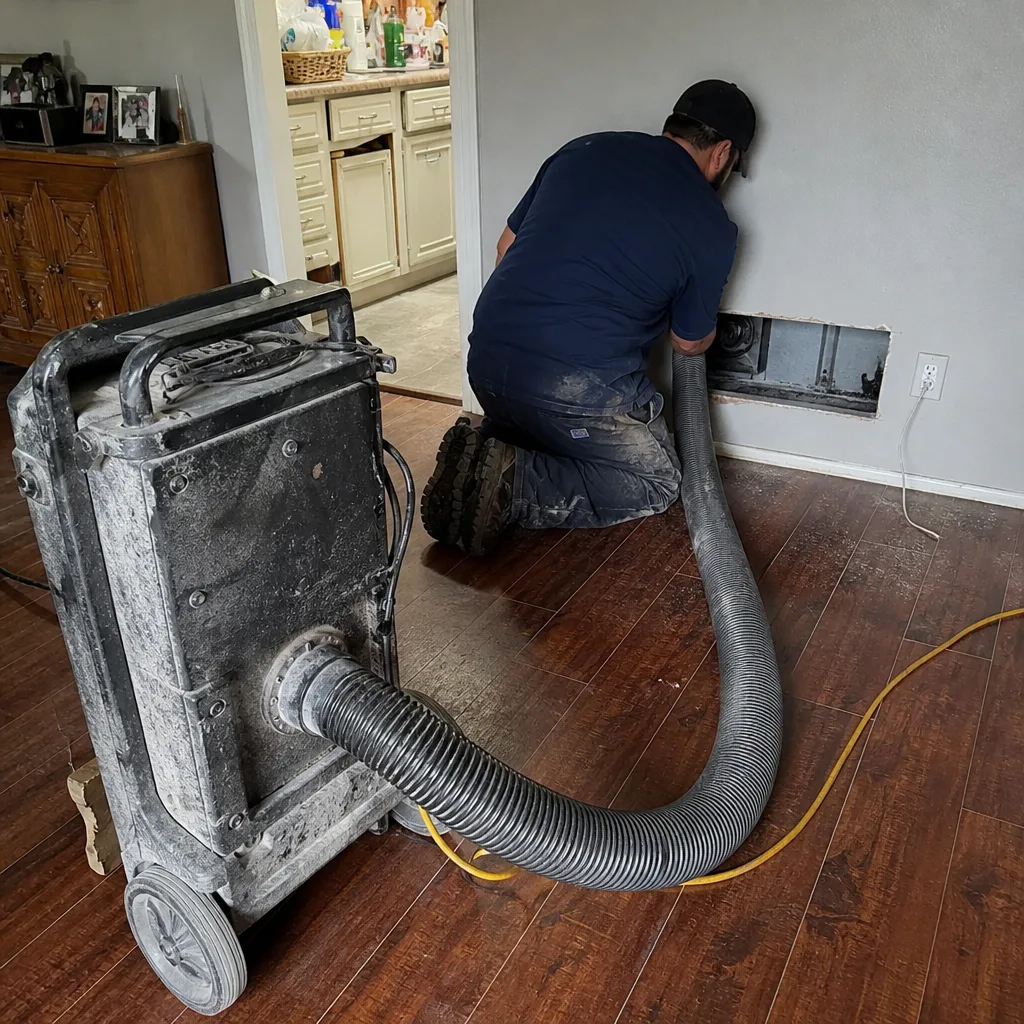 Before
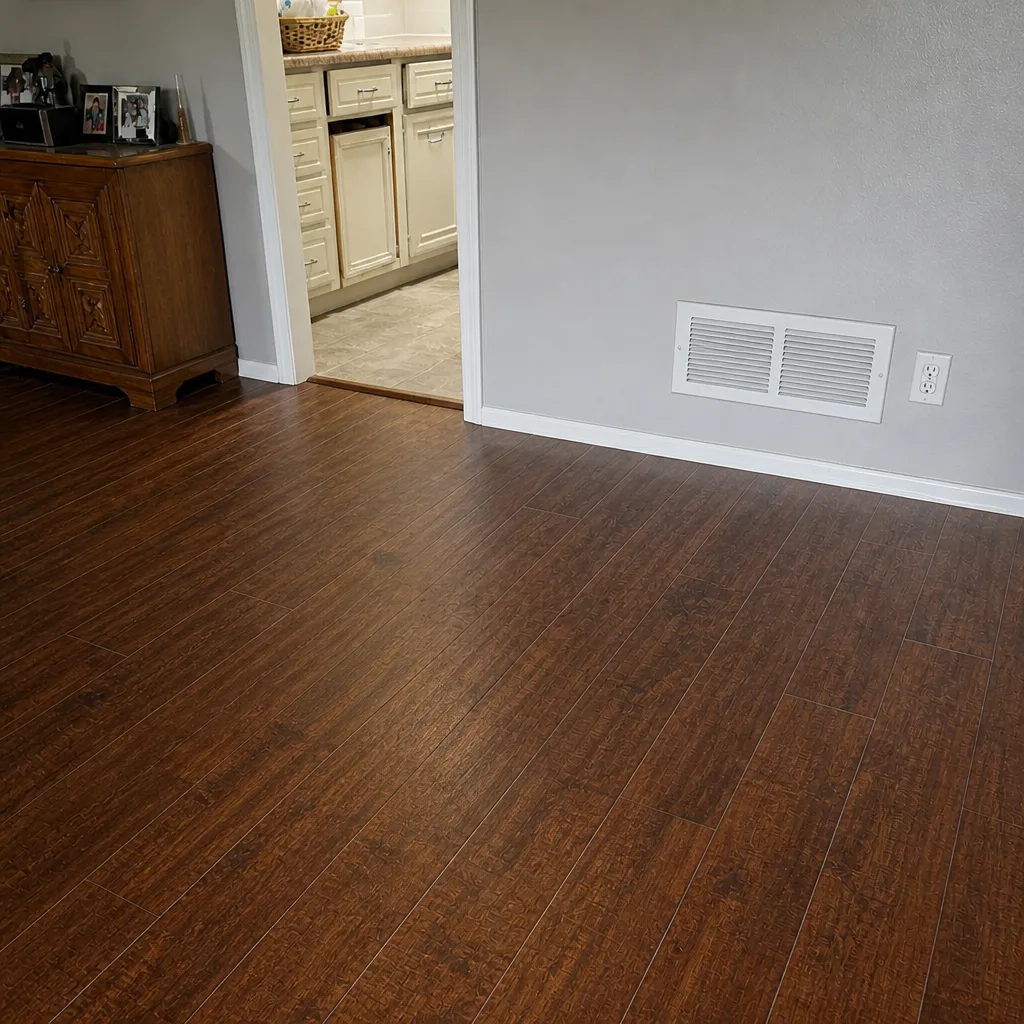 After
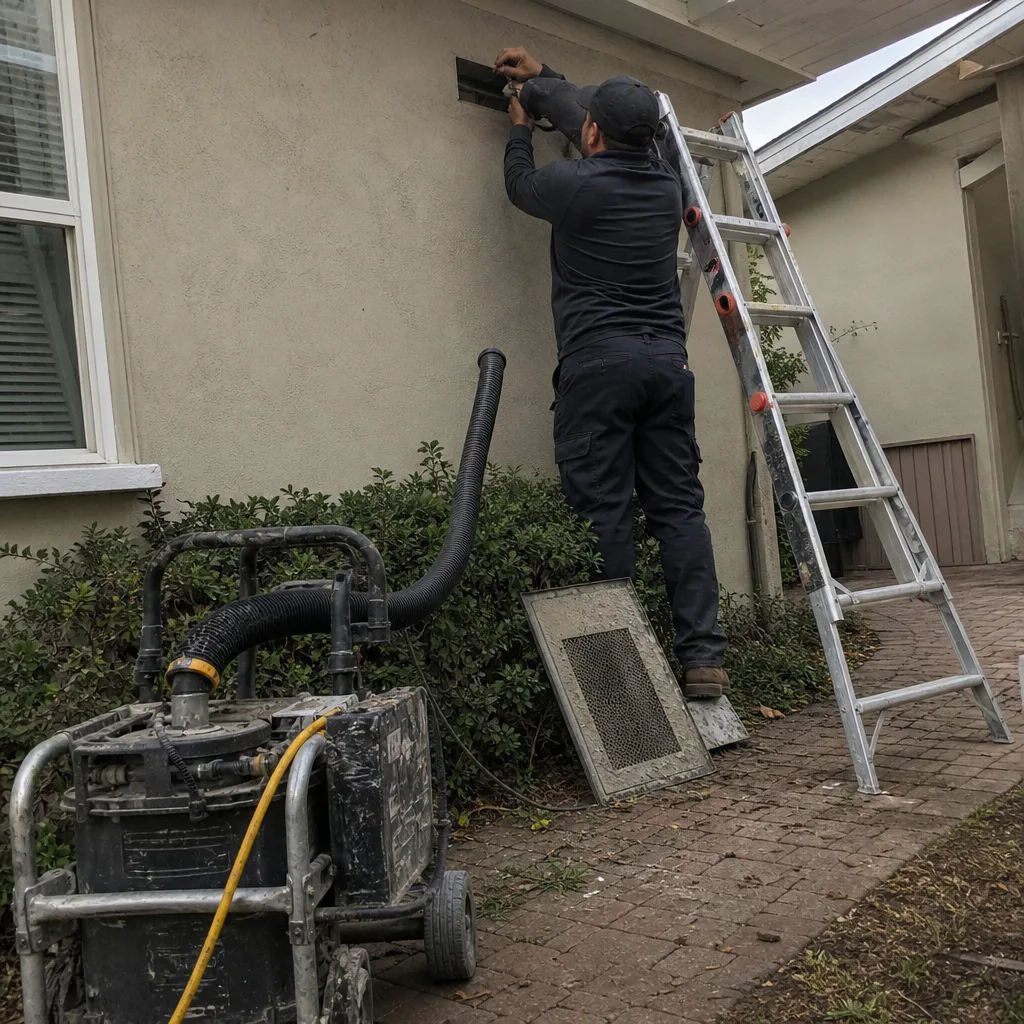 Before
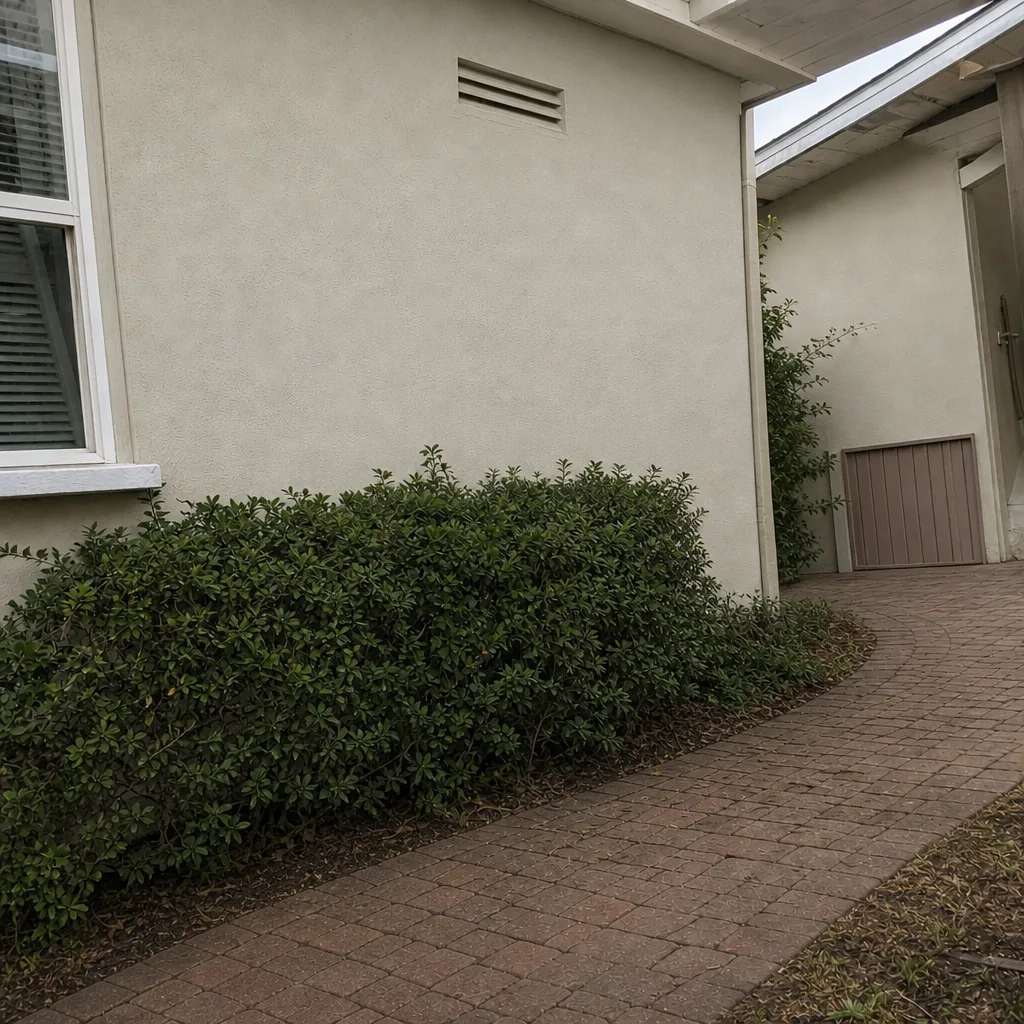 After
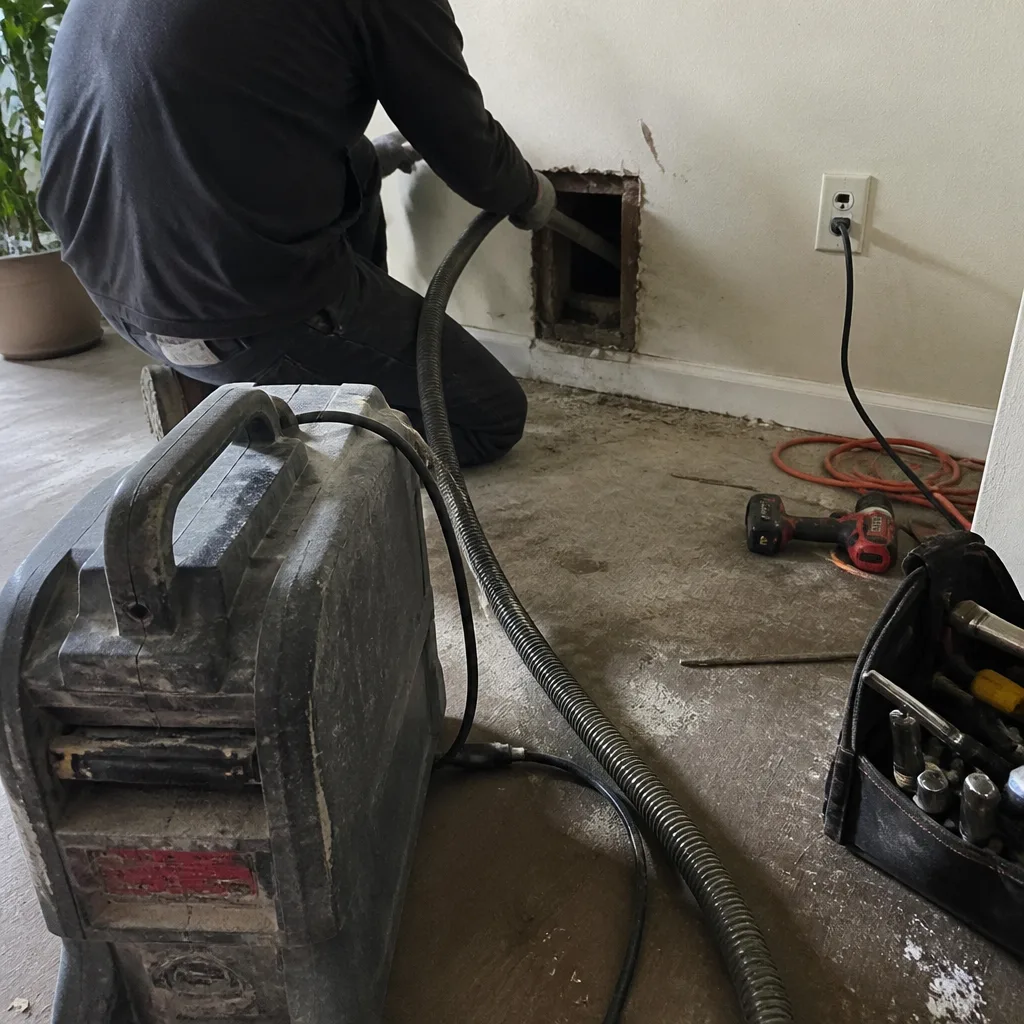 Before
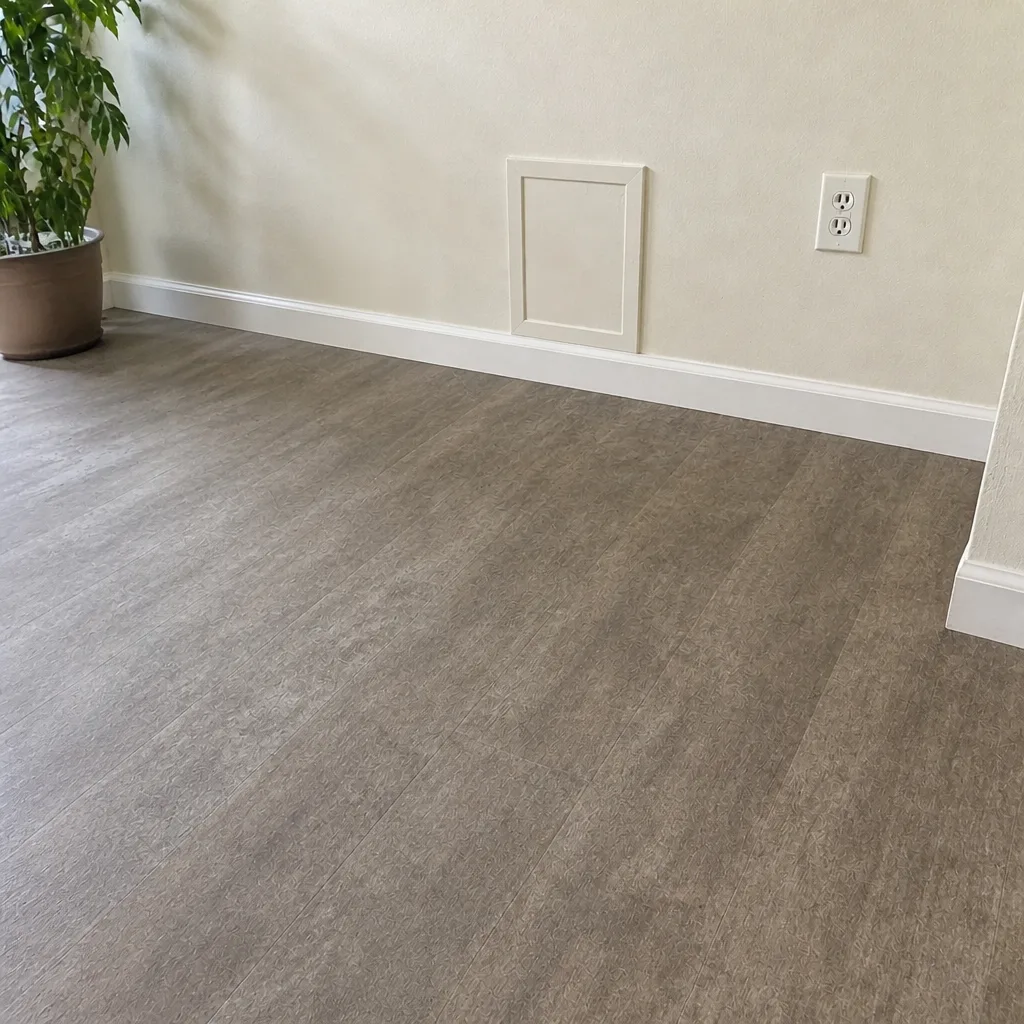 After
When to Call a Professional
You need a professional when you can’t answer basic questions about your own duct system – how many returns there are, what condition the ductwork is in, whether there are disconnected runs behind walls. You also need one when anyone in the home has respiratory sensitivity and you’ve noticed dust, musty odor, or visible debris at the registers. If a recent remodel or a pest issue has exposed the system to debris, that’s a cleaning call, not a wait-and-see. A technician can walk the system, photograph the trunk lines, and produce a written estimate the same visit. Highland Park Air Duct Cleaning Pros offers free estimates in Highland Park – call (844) 702-0753. We answer 24/7. Fast dispatch from 7am to 7pm, Sunday through Friday.
Our technicians have up to 8 years of experience, and that experience is spent diagnosing what’s actually happening inside the system, not upselling. If the honest answer is “your ducts don’t need cleaning yet,” that’s what you’ll hear.
Frequently Asked Questions
Most Highland Park homes fall somewhere between a few hundred and roughly a thousand dollars for a full-system clean, depending on linear footage of duct, vent count, accessibility, system age, and contamination level. A written estimate based on those factors is the only honest way to price your specific job. Call (844) 702-0753 for an exact quote – estimates are free.
Low quotes almost always mean partial scope. Common omissions include return-side cleaning, register removal, rotary agitation, HVAC component access, and before-and-after photos. Sometimes the phone quote is also superseded by a higher invoice once the technician arrives. Ask any company to put its complete scope in writing before you schedule. Call (844) 702-0753 if you want a second opinion on a quote you’ve received.
Before-and-after photographs of your own ducts, taken by the technician during the visit. Every Highland Park Air Duct Cleaning Pros job includes them, and any company that won’t commit to them in writing should be a pass. Line-item scopes plus photos are the only verifiable answer to “was it done.” Call (844) 702-0753 to book a visit with photos included.
There’s no single number that fits every home. A house with pets, recent remodeling, or a system that’s never been cleaned may need it sooner than one that’s been maintained. Most Highland Park homes fall into a multi-year cycle, but your technician should tell you the interval for your specific system after the assessment. Call (844) 702-0753 to have the system evaluated and get a recommended schedule.
Do it in the same appointment if the assessment finds leaks. Cleaning without sealing means the leaks reintroduce dust, and scheduling repair separately usually costs more than doing both together. We offer duct repair and sealing as a core service for that reason. Call (844) 702-0753 to have accessibility and leak potential assessed as part of the estimate.
Yes, and meaningfully. Retrofitted ductwork, hillside lots with stepped floor plans, and older homes with short-then-long irregular runs tend to cost more than flat-lot suburban builds with planned, accessible ductwork. The good news is that this is itemizable; you should see it reflected in the written estimate. Call (844) 702-0753 for a Highland Park-specific estimate.
The Bottom Line
The number at the bottom of a duct cleaning quote isn’t the point. The scope behind it is. If you can name the five cost drivers – linear footage, vent count, accessibility, system age, contamination level – you can walk any quote back to the work it’s pricing, and you can tell a genuinely competitive bid from one that omits the return side to hit a coupon price. Highland Park homes on older, hillier lots tend to carry more cost than suburban builds, but only a written estimate that counts the ducts and vents will tell you what applies to your house. Ask for the equipment names, the register count, and the photograph policy in writing. Then the price you get is a price you can trust.
If you’d like to see the full scope of what we handle – from Highland Park Air Duct Cleaning Pros full-system services through dryer vents, HVAC components, duct repair, and air quality treatment – give us a call. The estimate is free, the scope is written, and the price is set before work starts. Call (844) 702-0753. We answer 24/7. Fast dispatch from 7am to 7pm, Sunday through Friday.
Written by the team at Highland Park Air Duct Cleaning Pros.